About the Case
A factual overview of the people involved, what happened, and the alleged motive.
The Shooting
CCTV Footage. Source: Wikimedia Commons / Public Domain
On the morning of December 4, 2024, shortly before 7:00 a.m., Brian Thompson, the CEO of UnitedHealthcare — the largest private health insurance company in the United States — was fatally shot outside the New York Hilton Midtown hotel in Manhattan. Thompson was arriving for UnitedHealthcare's annual investor conference.
The gunman fled the scene on foot and then by bicycle into Central Park. Bullet casings found at the scene were inscribed with the words "deny," "defend," and "depose" — terms associated with insurance claim denial practices. A nationwide manhunt was launched immediately.
Who is Luigi Mangione?
Full Name
Luigi Nicholas Mangione
Date of Birth
May 6, 1998 (age 26 at time of arrest)
Hometown
Towson, Maryland
Education
B.S. & M.S. in Computer Science, University of Pennsylvania
Luigi Mangione comes from a prominent and wealthy Baltimore family of Italian descent. His paternal grandfather, Nicholas Mangione, was a first-generation Italian American who built a real estate empire. The Mangione family owns country clubs, nursing homes, a real-estate business (Mangione Family Enterprises), and Lorien Health Services, an assisted living company. A cousin, Nino Mangione, is a Republican member of the Maryland House of Delegates.
Mangione attended Gilman School, a prestigious all-boys private school in Baltimore, where he graduated as valedictorian in 2016. He then attended the University of Pennsylvania, earning both a bachelor's and a master's degree in computer science. After graduating, he co-founded an iOS game development company (AppRoar Studios) and worked as a data engineer at TrueCar, an online car marketplace.
Reports indicate Mangione suffered from chronic back pain, which may have influenced his views on the healthcare system.
The Victim: Brian Thompson
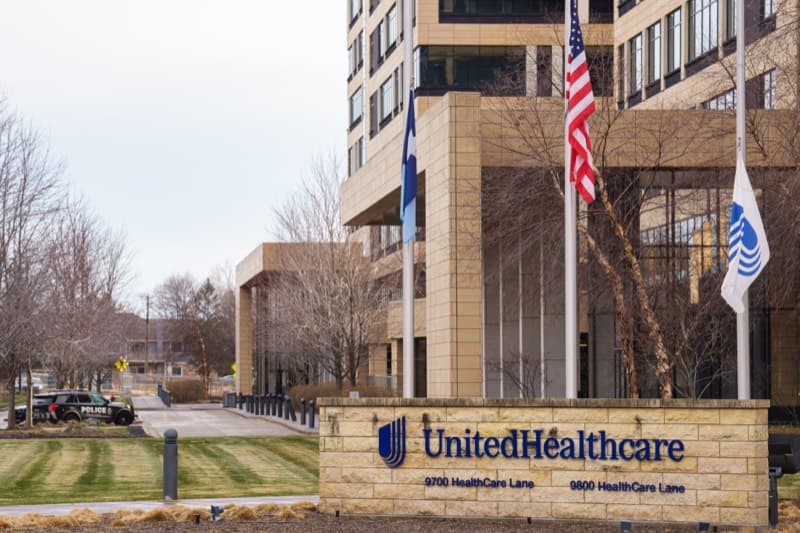
Police outside UnitedHealthcare HQ, Minnetonka, MN, Dec 8, 2024. Photo: Chad Davis / Wikimedia Commons / CC BY 2.0
Brian Thompson served as the CEO of UnitedHealthcare, the insurance arm of UnitedHealth Group, one of the largest healthcare companies in the world. He was attending the company's annual investor conference at the time of the shooting.
The Arrest

Downtown Altoona, PA — arrest location. Photo: Csoldner187 / Wikimedia Commons / CC BY-SA 3.0
Five days after the shooting, on December 9, 2024, Mangione was arrested at a McDonald's restaurant in Altoona, Pennsylvania, after being recognized by employees who had seen media coverage of the manhunt. He had been tracked through a hostel in Upper Manhattan, where he registered under the alias "Mark Rosario" using a fake New Jersey driver's license.
At the time of his arrest, a nine-millimeter handgun, ammunition, a suppressor (silencer), the fake ID, and a three-page handwritten document were recovered from his backpack.
Alleged Motive
The three-page document found on Mangione at the time of his arrest has been described as a manifesto. According to prosecutors and court filings, the document expressed hostility toward what he described as a "parasitic" health insurance industry, criticized corporate greed, and condemned UnitedHealthcare's practices.
Diary entries recovered by police reportedly revealed frustrations with the health insurance industry and planning for the attack. The entries also indicated Mangione considered the "court of public opinion" and sought to gain public support.
Note: Luigi Mangione has pleaded not guilty to all charges. The information above is based on prosecutors' filings and is alleged, not proven. All defendants are presumed innocent until proven guilty.
Public Reaction
The case generated significant public attention and debate about the American healthcare system. Mangione became a polarizing figure, with some viewing him sympathetically as someone who acted against perceived corporate exploitation, while others condemned the act of violence. The case reignited national conversations about health insurance claim denials, prior authorization, and corporate accountability in healthcare.